
Last updated: September 2026 in TREKKING.
Best Down Jackets for Women Trekking in Nepal (2026/2027 Guide to Everest & Annapurna Treks).

By Sandra · Founder of Nepalnewbies.com, first-time Himalayan trekker (Mardi Himal Base Camp, 2024)

Look at any picture from the trails in Nepal and you'll see everyone wearing a down jacket. But here’s the truth: half of those people are still freezing their tails off because they brought the wrong one 🥶.
Once you cross 3,000 meters (10,000 feet), temperatures plunge and teahouse nights get *brutally* cold I can tell you.
When I planned my first trek, I knew absolute zero about fill power or technical gear. I almost brought my casual puffer jacket to safe money—which would have been a disaster.
Turns out, you don't need to spend a fortune to stay warm, but you do need the right specs. Here’s my no-BS guide to picking a jacket you won't regret at sub-zero temperatures.
Quick Answer / Summary In a Hurry? Here's the Short Answer ⚡:
For high-altitude Nepal treks (like Everest Base Camp, Annapurna Base Camp, or Mardi Himal Base Camp), choose a women’s down jacket with at least 700 to 800 Fill Power (FP), an integrated insulated hood, and a weight under 400 grams.
Top Picks for 2026/2027:
• Best All-Rounder: Patagonia Down Sweater Hoody (~$330 / 800 FP)
• Best Expedition Warmth: TNF Summit Series (~$380+ / 800 FP)
• Best Ultra-Budget Pick: Decathlon Forclaz MT500 (<$100 / 800 FP)
Read on for the full comparison table, features that actually matter at sub-zero temperatures, and my honest advice on renting in Kathmandu vs. buying before you travel. 👇
Table of Contents
- Do I Really Need a Down Jacket for Trekking in Nepal?
- What Features to Look for in a Women’s Down Jacket
- The Best Down Jackets for 2026/2027 : Everest & Annapurna (comparison table)
- Should You Buy or Rent a Jacket in Kathmandu or Pokhara?
- How to Layer and Pack Your Down Jacket
- Styling tips for wearing a lightweight down jacket.
1. Do I Really Need a Down Jacket for Trekking in Nepal?
When I first started planning my trek in Nepal, I kept wondering: Do I really need a down jacket and should I buy a new one, or will my old jacket be enough? It always keeps me warm on chilly walks with my doggie, so I thought maybe it would do the trick.
Turns out… big NO. After my first trek, I knew exactly why. I ended up buying a new down jacket before the trek because I didn’t want to find out on the trails — and in hindsight, that was absolutely the right choice. At higher altitudes, I even slept in it! You can’t imagine how cold it can get at night in the Himalayas.
So, should you bring a down jacket, and why? The answer is YES:
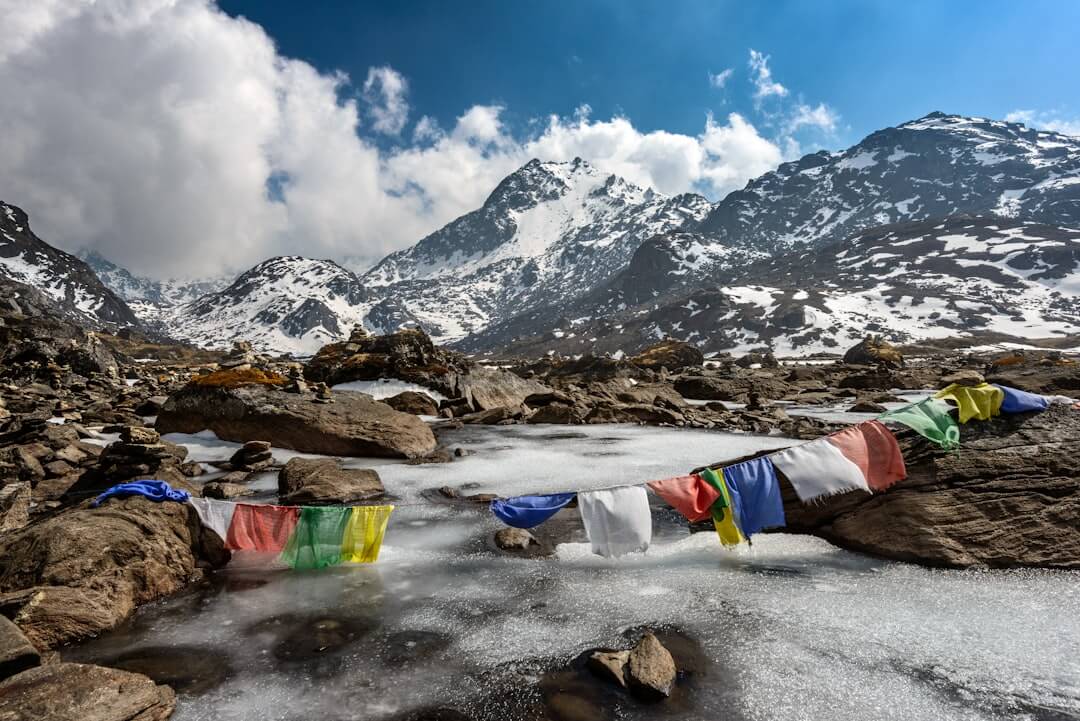
- High-altitude temperatures drop fast. Even on sunny days, the Everest Base Camp trail and Annapurna trail can feel freezing above 3,000–4,000 meters. Nights in teahouses often dip well below 0°C (32°F).
- Wind and light snow make it worse. A down jacket traps warmth efficiently, and a water-resistant shell protects against light rain or snow — something your everyday jacket likely won’t.
- Warmth = comfort + energy. Staying cozy lets you enjoy the trek more and keeps your energy up. Cold can quickly turn a beautiful hike into misery.
- Lightweight and packable. Modern down jackets from reputable outdoor brands are designed for trekking — they’re easy to carry all day, pack into your backpack, and pull out whenever needed without feeling bulky.
PRO TIP Even if you already own a down or synthetic jacket, trekking in Nepal requires something warm, light, and slightly weather-resistant. Buying a proper down jacket before my trek made the experience far more comfortable — and sleeping in it at night proved just how essential it really was.
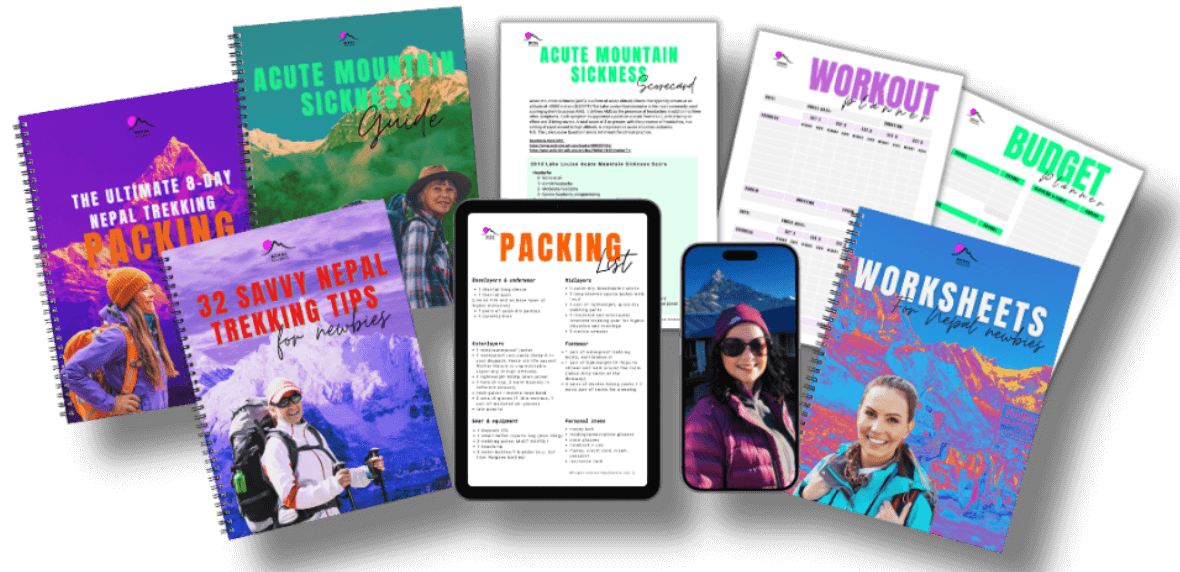
Prepare for Your Nepal Trek the Easy Way –
Get the Ultimate NEPAL Starter Kit.
NEW: Grab my complete Starter Kit packed with gear lists, handy guides, worksheets, and insider tips for trekking smart in Nepal!
2. What Features to Look for in a Women’s Down Jacket.
After realizing my old jacket wouldn’t cut it, I started paying attention to what makes a down jacket truly effective for trekking in Nepal. Not all jackets are created equal, and there are a few key features that make a huge difference — especially for first-time trekkers.
Here’s what I learned to look for:
- Warmth and Fill Power. I didn't realize, but down jackets come with different fill powers, usually between 600–900. The higher the fill power, the warmer and lighter the jacket. For Nepal treks, I found that a jacket with at least 700-fill power keeps you warm without being heavy. Mine was 800FP (TNF summit collection), super light and very warm.
- Water Resistance or DWR Coating. Weather in the Himalayas can be unpredictable — light snow, drizzle or even fog can ruin a non-resistant jacket. Many modern down jackets come with a Durable Water Repellent (DWR) coating to help shed moisture and keep the down fluffy and warm.
- Hood Design. I ended up buying a down jacket without a hood because it was much cheaper and paired it with a beanie I kept in the inner pocket. On the bright side, it saved me about $100. But in hindsight, it wasn’t ideal — sometimes you want a hood to protect against wind or light drizzle, and a beanie just doesn’t do the job. If you can, choose a jacket with an insulated, adjustable hood.
- Fit and Layering. Women-specific jackets usually follow the curves of the body, which can make them snug around the hips or midsection. I found that when layering, a men’s cut can sometimes feel more comfortable — but that’s really personal preference. The key is to make sure you can comfortably layer a base and a first mid-layer underneath without feeling restricted.
- Pockets and Practical Features. Hand-warmer pockets, inner stash pockets, adjustable cuffs, and a drawcord hem aren’t just “nice-to-have” — they make everyday trekking more comfortable and keep your essentials handy.
- Lightweight and Packable. Modern down jackets from reputable outdoor brands are compact, so you can stuff them into your backpack during warmer daytime hikes and pull them out whenever needed. At lower elevations I used my jacket as a fluffy down pillow. So cosy!
PRO TIP Don’t just focus on color, style or brand. Think about warmth, weight, practicality, a hood, and fit. Even if a women-specific cut looks perfect, trying a slightly roomier men’s jacket can make layering much more comfortable for longer treks.
3. The Best Down Jackets for 2026/2027: Everest & Annapurna.
After spending hours researching, trying on different jackets, and putting my gear to the test on the trail, I realized that not all down jackets are created equal. Different brands and models are suited for different altitudes, budgets, and trekking styles.
To help you choose the right layer for your 2026/2027 Nepal trek, here is a quick comparison of the top women’s down jackets for Nepal:
| Model / Jacket | Fill Power | Weight | Best Used For | Price (USD) | Key Pros & Cons |
|---|---|---|---|---|---|
| Patagonia Down Sweater Hoody | 800 FP | ~343 g | Best All-Rounder (EBC & Annapurna) | ~$330 | + Extremely durable - Higher price tag |
| The North Face Summit Series | 800 FP | ~380 g | High-Altitude / Expedition-Ready | ~$380-450 | + Pro warmth & windproofing - Premium price; check hood |
| Rab Microlight Alpine | 700 FP | ~414 g | Cold Weather & Damp Conditions | ~$280 | + Hydrophobic down - Slightly heavier |
| Mountain Hardwear Ghost Whisperer 2 | 800 FP | ~220 g | Ultralight / Minimalist Hikers | ~$380 | + Extremely packable - Delicate outer fabric |
| REI Co-op Magma 850 Hoodie | 850 FP | ~300 g | Best Value Performance (US) | ~$249 | + Great warmth-to-weight - Mostly US/REI stores |
| Decathlon Forclaz MT500 (800 CUIN) | 800 FP | ~380 g | Best Ultra-Budget Pick | <$100 | + Unbeatable price - Zippers can be sticky |
Detailed Breakdown of My Top Picks:
Patagonia Down Sweater Hoody – Best overall performance (top tier, pricey).
- Built with 800-fill power responsible down, it is super lightweight, packable, and warm enough for high-altitude rests on the Everest Base Camp trail. The adjustable hood is a major plus.
Rab Microlight Alpine – Best for cold & damp weather.
- Uses 700-fill hydrophobic down, making it resilient against light snow or valley drizzle. Slightly heavier, but built like a tank.
The North Face Summit Series – Expedition-Ready.
- Designed for serious mountaineering with 800-fill power. This was my personal choice for Nepal. It kept me warm even in freezing teahouses—my only small regret was picking a hoodless model!
Mountain Hardwear Ghost Whisperer 2 – Ultralight Pick.
- Weighing barely 200 grams, it’s ideal if every ounce in your daypack counts.
REI Co-op Magma 850 – Best US Value.
- An excellent 850-fill jacket at a much friendlier price point than high-end mountain brands.
Decathlon Forclaz 800 CUIN – Absolute Budget Winner.
- Available globally for under $100. It proves you don’t need to break the bank to stay warm on your first trek.
PRO TIP If you are buying a top-tier jacket before your trip, buy during summer end-of-season sales or look for last year's color models online. You can easily save 30% to 40% on brands like The North Face or Patagonia.
4. Should You Buy or Rent a Jacket in Kathmandu or Pokhara?
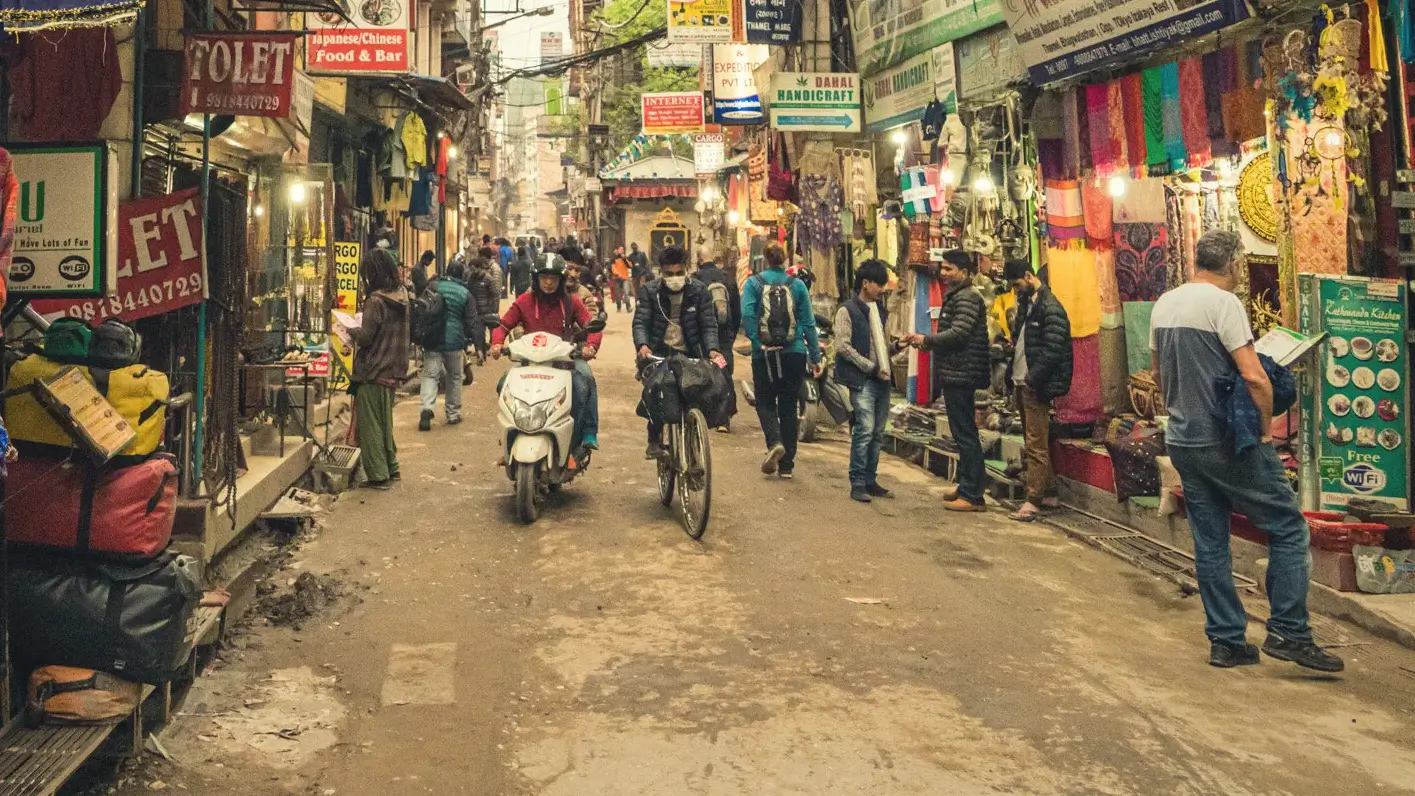
It definitely crossed my mind to buy or rent all my gear in Nepal. When you arrive in Thamel (Kathmandu) or Lakeside (Pokhara), you’ll find hundreds of colorful shops overflowing with sleeping bags, trekking poles, and down jackets.
However, when it comes to a piece of gear that directly impacts your safety and body temperature at 5,000 meters, renting vs. buying at home requires careful thought.
Renting a Jacket in Nepal: The Reality
Renting is popular for travelers on a tight budget or those continuing their trip to warm destinations like Thailand right after Nepal.
- Cost: Renting a down jacket costs around $1 to $3 USD per day (approx. 130–400 NPR).
- Pros: Saves luggage space on your international flights and keeps upfront costs very low.
- Cons & Risks:
- Hygiene & Cleanliness: Rental jackets are "washed" repeatedly (if you're lucky), which can clump the down fill and drastically reduce insulation.
- Sizing Issues: Finding genuine women-specific cuts or smaller sizes can be a struggle in local rental shops.
- Time-Consuming: You’ll spend your first day in Kathmandu hunting through shops and annoying haggling instead of relaxing.
- Fake Down: Many local rental shops offer counterfeit gear stuffed with heavy synthetic fibers or low-grade feathers that won't keep you warm at sub-zero temperatures.
Buying Before Your Trip vs. Buying in Nepal
If you decide to buy, I strongly recommend purchasing your jacket before leaving home. When I bought my North Face Summit Series jacket in advance, I was able to test its fit over my layers and even wore it on my chilly 13-hour flight to Nepal!
Buying authentic gear in Nepal is possible (there are official North Face, Mountain Hardwear, and Sherpa Adventure Gear stores in Thamel), but prices there are identical to Western retail prices. The cheaper jackets sold on the streets are almost exclusively local knock-offs ("North Fake"). Also, the rental jackets from your trekking agency...same comments.
My Recommendation for Beginners:
- If you trek above 4,000 m (like Mardi Himal BC, Annapurna BC, etc.): BUY a genuine 800+ fill power jacket before you travel. Your life and comfort depend on reliable insulation.
- If you are doing a lower/shorter trek (like Ghorepani Poon Hill in peak season): Renting in Thamel or buying a local budget jacket can work - check the loft and zipper quality carefully.
Before you finalize your gear list, make sure to check out my comprehensive First Trek Nepal Pack List in the Nepal Starter Kit to ensure you don't miss other essentials, and read my practical guide on Using a Toilet in Nepal for Beginners so you know what to expect in tea-house bathrooms!
PRO TIP: Your down jacket is a core safety layer at high altitudes. Quickly grabbing whatever is cheapest in a chaotic market can cost you energy, warmth, and health on the trail. Invest the time to secure the right jacket before your trek starts!
5. How to Pack, Layer, and Care for Your Down Jacket
How to Layer and Pack Your Down Jacket
If you’re trekking in Nepal for the first time, here’s something you quickly learn: it’s all about layering. The weather can swing from sunny and warm in the valleys to freezing and windy at higher altitudes — sometimes all in the same day.
How to Layer with a Down Jacket
When I started packing, I didn’t really understand layering. I just knew I didn’t want to freeze. But after my first trek, I realized that how you wear your down jacket is just as important as which one you buy.
Here’s what worked best for me:
- Base layer: A breathable, moisture-wicking shirt (merino wool or synthetic). I packed a bunch of TNF t-shirts in different colors.
First mid layer: A light fleece or jacket adds just the right amount of extra insulation. My hiking jacket had a windproof hood, which turned out to be a lifesaver since my down jacket didn’t have one.
- Second mid layer: Your down jacket for warmth during rest stops, evenings, and cold mornings.
The real outer layer would have been a shell layer (optional): A lightweight waterproof rain jacket over your down when it’s windy, wet, snowy or drizzling — since down loses warmth when wet.
Tip: If your jacket doesn’t have a hood (like mine didn’t), bring a beanie or buff to cover your ears when the wind picks up.
How to Pack Your Down Jacket
Down jackets are surprisingly easy to pack if you do it right.
- Don’t over-compress it for long periods — it can damage the down fill.
- Use a dry bag or stuff sack to keep it protected from moisture in your backpack.
- Keep it easily accessible, that is in your day pack on your back - not in your duffel carried by the porter! You’ll use it during breaks or when the weather suddenly turns.
- I even used mine as a pillow — cozy and practical!
My takeaway
Your down jacket will quickly become your most-loved piece of gear — from cold mornings on the trail to cozy nights in the teahouse. Pack it smart, layer it right, and take care of it, and it’ll take care of you for many adventures to come.
6. Styling tips for wearing a lightweight down jacket.
While functionality is key when choosing a lightweight women’s down jacket for high-altitude trekking, style doesn’t have to take a back seat — especially when you’re surrounded by the breathtaking Himalayas. Think of all those photos and selfies you’ll take along the trail! You can absolutely capture lifetime memories and still look bold, confident, and beautiful doing it.
To elevate your trekking look, try layering your down jacket over color-coordinated or color-blocked base layers and insulating mid-layers for warmth and visual contrast. Go for a jacket with a flattering, non-bulky silhouette that highlights your shape but still gives you room to move and layer underneath.
Style tip: Earth tones and neutral shades blend with the mountain scenery, while bright colors pop in photos — especially against snow or stone trails.
Add a pop of personality and color
On the trail, I noticed some women really stood out — they popped against the mountain backdrop simply because they made an effort to style even their outdoor outfits. It was such a good reminder that trekking gear doesn’t have to look dull or purely functional.
Experiment with color! Don’t be afraid to add a pop of personality to your Himalayan trekking outfit. While neutral tones like black, navy, and gray are versatile and timeless, they can sometimes blend into the landscape. Bold colors or subtle patterns not only make your photos more striking but also reflect your personal style — think vibrant reds, deep teals, or earthy olive greens.
Pair your lightweight down jacket with insulated trekking pants, waterproof boots, and a cozy beanie for a look that’s both functional and stylish. You’ll stay warm, comfortable, and photo-ready — the perfect combo for those amazing Himalayan memories.
PRO TIP Style tip: Earth tones and neutral shades blend beautifully with the mountain scenery, while bright colors really pop in photos — especially against snow, forests or stone trails.
Conclusion: Stay Warm, Comfortable, and Stylish on Your Nepal Trek
When I planned my first trek in Nepal, I quickly realized how much a good women’s down jacket matters. The right jacket can be the difference between freezing at 4,500 meters or feeling cozy and confident, whether you’re on the trail, at a teahouse, or even on a long-haul flight.
From lightweight, packable options for Everest Base Camp to budget-friendly choices like Decathlon’s Forclaz 800 CUIN, there’s something for every traveler. The trick is to find a jacket that fits well, keeps you warm, and works with your layering system — without sacrificing your personal style.
Whether you buy at home, shop locally, or rent in Nepal, your gear is an investment in your comfort and safety. Take the time to layer smartly, pack carefully, and care for your jacket, and you’ll thank yourself on those chilly mornings and windy passes.
And yes — you can look good while trekking! I saw women on the trail who really stood out simply because they added a little color or style to their gear. Even small touches like a bright beanie or a patterned base layer can make you feel confident and camera-ready while exploring the Himalayas.
In the end, your first trek in Nepal is all about creating memories. With the right jacket, smart layering, and a touch of style, you can focus on soaking in the mountains, making new friends, and capturing every breathtaking moment — warm, comfortable, and ready for anything the trail throws your way.
Questions, thoughts, ideas? Let's hear them in the comments below.
PREPARE FOR YOUR NEPAL TREK THE SMART WAY!
Everything I wish I'd had before my first trek: checklists, worksheets and honest tips. Free!

Hey there, I'm Sandra!
Life coach, mountain lover and proud Nepal newbie. I did my first trek in Nepal in my fifties, and it changed everything. Nothing grounds you like standing among those Himalayan giants.
On the trail, I learned the hard way that it's as much a mental game as a physical one. So I started Nepalnewbies.com to give beginners like us the honest advice I wish I'd had. No sugar-coating.
👉 READ MY STORY
Popular posts
What I found out, no sugar-coating, about what 17,598 ft (5,364 m) asks of you.
I made it to base camp, but my prep wasn't even close. Learn from my mistakes.

Here's what using a toilet is really like on a trek, and 10 tips to make it a lot less awkward.
NEW: THE NEPAL STARTER KIT.
Grab My Nepal Starter Kit.

PREPARE FOR YOUR NEPAL TREK THE SMART WAY! Everything I wish I'd had before my first trek: checklists, worksheets and honest tips. Free!
Copyright ©Nepalnewbies.com All Rights Reserved.
The Nepal trekking blog for beginners who want the real story. First-hand experience from a fifty-something beginner, honest tips and practical guides for your first trek in Nepal. Squat toilets included. No sugar-coating.
Copyright © YourCompany. All Rights Reserved