
Revised July 24th, 2026 in TREKKING.
Nepal Trekking for Beginners: My 6-Trek Shortlist.

By Sandra · Founder of Nepalnewbies.com, first-time Himalayan trekker (Mardi Himal Base Camp, 2024)

Trekking in the Himalayas of Nepal is the Champions League of hiking. With more than 1,300 peaks over 6,000 meters and 8 proper 8,000ers, this place is definitely not for softies. So, if you're a total beginner, what on earth are you actually getting yourself into—and where do you even start?
The good news? Tackling trekking in Nepal for beginners doesn't mean you have to go to Everest Base camp on your first try. To keep you from completely destroying your knees on day one, here are 6 of the best beginner-friendly treks in Nepal that I’ve either done myself or seriously looked into.
First: Is Nepal really a good destination for beginner hikers?
Good news: Even though Nepal might sound intimidating and "advanced" because you’ll be hiking in the Himalayas, it’s actually an amazing destination for beginner hikers—even if you’ve never done multi-day hikes in high mountain areas before. Here’s why:
1. Variety of trails
Nepal has a wide range of trekking routes that cater to different skill levels. Beginners can choose from easier treks, such as the Ghorepani Poon Hill trek (more on that later). These treks offer you an amazing experience with stunning views, without the technical difficulties associated with more advanced hikes.
2. Excellent trekking infrastructure
Nepal has a well-established trekking infrastructure that makes it a good choice for beginner hikers. There's a complete network of well-marked trails throughout different regions with stone paths, comfortable stairs and sturdy bridges, welcoming lodges, and a wealth of experienced local guides and porters to support your journey.
3. Relatively gentle ascents
The trails suitable for beginners are set up in a way that combines nice, gentle slopes with challenging, steeper sections. This mixture spices up your trek, but at the same time makes adjusting to the higher altitudes easier without feeling too overwhelmed. You can keep a slow and steady pace, keeping things safe and giving you plenty of time to soak in the incredible views around you.
So, trekking in the Nepalese Himalayas is the real deal; however, it's still very accessible for beginner hikers... if you choose the proper trek. The catch? Nepal doesn't really do "flat." You'll be climbing a lot of stone steps and dealing with changing weather. More on that later. You don't need to be an elite athlete, but a decent base fitness will definitely make the experience way more fun.

What does it mean to be a "beginner trekker"?
Figuring out how much of a "beginner" you actually are is pretty essential before picking a trail.
Let's be real: "beginner-friendly" in the Himalayas isn't the same as a flat stroll in the park. You need to be honest with yourself about a few things:
- Your experience: Have you ever done a multi-day hike, or is this your very first time living out of a backpack for days?
- High-mountain reality: Walking at high altitude hits differently. Even if a trail isn't technical (no ropes or ice axes needed), the thin air and endless stone steps will test your lungs.
- Your baseline fitness: You don't need to be a marathon runner, but you do need decent legs, solid knees, and the stamina to walk 4 to 6 hours a day, uphill.
At the end of the day, picking the right route isn't just about finding the shortest, cheapest, or most Instagrammable trek. It’s about staying safe, actually enjoying the view, and finishing with a smile instead of destroyed knees.
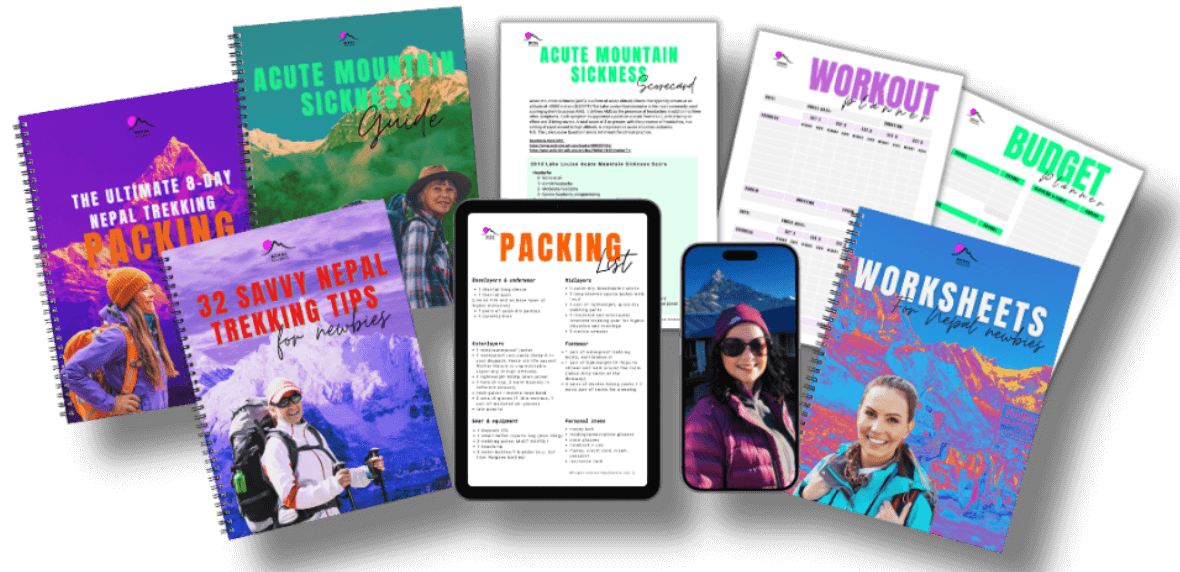
Prepare for Your Nepal Trek the Easy Way –
Get the Ultimate NEPAL Starter Kit.
NEW: Grab my complete Starter Kit packed with gear lists, handy guides, worksheets, and insider tips for trekking smart in Nepal!
Trekking Difficulty categories
So in Nepal, treks are generally classified into difficulty categories easy, moderate, and challenging (and combinations) based on factors like the trail's terrain, altitude, and overall hiking difficulty.
Category Easy
Easy treks in Nepal typically involve shorter durations, well-defined paths, and minimal altitude gain per day, making them suitable for beginners or those looking for a more leisurely experience.
Category Moderate
Moderate treks often feature longer durations, varying terrain, and/or moderate altitude gains, catering to trekkers with some hiking experience and a "reasonable" fitness level (although we think that for all beginner hikers goes that in Nepal, you have to have a good fitness level at all times to really enjoy your Nepal trek).
Category Challenging
Challenging treks in Nepal are characterized by rugged terrain, significant altitude gain, and longer durations, demanding a high level of physical fitness and prior trekking experience. These treks often lead to high-altitude destinations and may involve crossing high mountain passes, offering a genuinely exhilarating but demanding adventure for seasoned trekkers.
PRO TIP: Difficulty categories can be helpful, but they are subjective and relative. If you see a combined category, like "moderate to challenging," expect the challenging part to be dominant. Which means it can make or break your trekking adventure.
What's required for beginners to trek in Nepal?
OK, let's get real here. A trekking adventure in Nepal requires careful preparation to ensure a safe and enjoyable experience. This includes:
1. Good to excellent fitness level
Obviously, one of the most important considerations is your physical fitness level. While the beginner-friendly treks in Nepal are designed to be manageable for those new to hiking and trekking, engaging in a regular exercise routine in the months leading up to your trip is still crucial.
A good fitness level is essential for building the endurance and strength needed to tackle ascents and navigate varied terrain. At times, you may face hundreds of steps to climb or hike to a viewpoint or your next resting stop, all while having only 85% oxygen in your blood.
PRO TIP Aim for at least 30-60 minutes of cardio exercises several times a week. Additionally, add strength training exercises for your legs, such as squats, lunges, and step-ups, to prepare your muscles for the demands of trekking. A stretching yoga flow that you practice regularly/daily is also helpful.
2. Assemble quality gear and equipment
Another essential preparation is to get the right gear and equipment required for trekking in Nepal. This includes sturdy hiking boots, moisture-wicking layers, a VERY warm sleeping bag, and other essential items such as trekking poles and crampons if you expect snowfall. Can it be cheap? Well, investing in quality gear that will keep you comfortable and protected during your trek is necessary, as the conditions can be demanding, especially at higher altitudes.
PRO TIP You can purchase all your gear in places like Kathmandu, but be cautious about the quality. Always inspect items rigorously, whether it's trekking poles, crampons, headlamps, or other equipment, to ensure they are not broken and function properly. Your safety may depend on it!
3. Familiarize with mountain hiking techniques
Here's some advice the pros often forget to give beginner hikers/trekkers in Nepal: getting familiar with mountain hiking techniques is super important! I found out the hard way.
The trails in Nepal can get pretty tough, with different terrains and high altitudes. Understanding proper hiking techniques like pacing, balancing and foot placement on steep descents helps prevent injuries and fatigue, which can make a huge difference in avoiding injuries, enjoying your trek, and keeping your energy and spirit up.
Knowing the mountain hiking techniques upfront means you can practice them at home, even when you don't have mountains at hand. So look into it and prepare your muscles, legs, and knees before you go!! Consider it a must-do for beginners.
4. Doing your homework: research your trekking itinerary
Researching and planning your itinerary well in advance is highly recommended. This includes understanding the difficulty level of the trek, its duration, and the specific altitude gains and sleeping stops along the way. By doing your homework, you can better manage your expectations and ensure that the trek you choose aligns with your hiking experience and fitness level.
Additionally, familiarize yourself with local customs, etiquette, and potential health and safety considerations. This preparation will help you navigate the unique challenges that may arise during your trekking adventure in Nepal. For more in-depth or practical information about health, gear, clothing, and trekking tips, check out our free >> Nepal Starter Kit.<<

The 6 best treks in Nepal for beginners
Ok, are you ready? Here's our curated list of the 6 best treks for beginners in Nepal.
1. Mardi Himal Trek
Difficulty Level: Moderate / Highest Elevation: Approximately 4,300m at view point or 4,500 meters (14,763 feet) at Mardi Himal Base Camp / Distance: Around 40 kilometers (25 miles) round trip, depending on the route taken / Duration: Typically 5 to 7 days to complete
Absolutely our favorite beginner trek! The lesser-known Mardi Himal trek is definitely our favorite choice for beginners looking to experience the breathtaking beauty of the Himalayas! This hidden gem trek offers stunning views of snow-capped peaks of Annapurna and "Fishtail Mountain" (Machapuchare), beautiful rhododendron forests, and a relatively gentle terrain, making it suitable for beginners with good physical fitness.
The trek typically takes around 5-7 days. It reaches an altitude of about 4,300 meters at the upper view point, allowing beginners to acclimate gradually while still enjoying an unforgettable Himalayan adventure. With comfortable teahouse accommodations along the route and the opportunity to see iconic peaks of Annapurna South, Hiunchuli and Machapuchare, the Mardi Himal trek is a fantastic introduction to trekking in Nepal for beginners.
Bonus: If the weather and conditions are good, you can push on to the base camp at 4,500m which will be an amazing experience!
PRO TIP Most trekkers make it to the Mardi Himal Upper Viewpoint at 4,300m without any major issues. If the weather and conditions are good, you can push on to the base camp at 4,500m. This part is challenging as it involves hiking up a long, steep and exposed ridge.

2. Ghorepani Poon Hill Trek
Difficulty Level: Easy to Moderate / Highest Elevation: Approximately 3,210 meters (10,531 feet) at Poon Hill / Distance: Around 32 kilometers (20 miles) round trip from Nayapul / Duration: Typically 4 to 5 days to complete, depending on the pace and itinerary.
The Ghorepani Poon Hill Trek is an excellent choice for beginners and those looking for a short yet rewarding trekking experience in the Annapurna region. The trek usually takes around 4 to 6 days, making it manageable for beginners who may not have extensive trekking experience or time to commit. Poon Hill stands at an elevation of 3,210 meters (10,531 feet), which is relatively lower than many other trekking routes. This reduces the risk of altitude sickness and makes it easier for beginner trekkers.
The Ghorepani Poon Hill Trek typically starts at Nayapul, which is about a 1 to 1.5-hour drive from Pokhara. The trek covers approximately 55 to 60 kilometers (around 34 to 37 miles) round trip, depending on the specific routes and detours taken. Most trekkers complete the journey in about 4 to 5 days, allowing time for acclimatization and enjoying the stunning views along the way.
Personal note: The reason we chose not to do this trek as our first trekking adventure is that it felt a bit condescending to us to trek a hill rather than a real mountain, especially since we were traveling so far to see the Himalayas! That's just who we are! 😉

3. Langtang Valley Trek
Difficulty Level: Moderate / Highest Elevation: Approximately 4,800 meters (15,748 feet) at Kyanjin Gompa / Distance: Around 70 kilometers (43 miles) round trip from Syabrubesi / Duration: Typically 7 to 10 days to complete
Located just north of Kathmandu, the Langtang Valley Trek is a true gem that provides a serene and less crowded trekking experience. This trek takes you through picturesque villages, beautiful alpine meadows, and stunning glacial landscapes. It can be done in 5-7 days.
While Kyanjin Gompa (12,696 ft / 3,870 m) is the highest village where you’ll sleep, the real high points of the trek happen on your side trips. Most hikers head up to Kyanjin Ri (15,659 ft / 4,773 m)—the most popular day hike from the village and, for many beginners, the true peak experience of their journey.
If you’re craving an even bigger challenge, you can tackle Tsergo Ri (16,351 ft / 4,984 m), a longer and steeper climb that marks the absolute maximum altitude you can reach on the classic Langtang Valley Trail.
The Langtang Valley Trek is often recommended for beginners due to its moderate difficulty level (note: compared to other treks!). The trail is well-defined, making it accessible for beginner trekkers. Additionally, the duration of the Langtang Valley Trek is shorter than some of the more challenging treks in Nepal, making it an ideal option for beginners or those with limited time. But don't let this fool you: this trek is demanding!
Personal opinion
Let’s be honest: if your Himalayan dream is all about ticking off famous bucket-list names like Everest, Ama Dablam, Lhotse, or Annapurna One or Annapurna South, Langtang’s peak list might sound a bit lesser-known at first glance.
But here is the secret that makes this trek so special: proximity. Instead of gazing at world-famous 8,000-meter giants from miles away across a valley, Langtang places you right at the immediate base of massive 6,000- and 7,000-meter ice walls!
At an impressive 7,234 meters (23,734 ft), mount Langtang Lirung is the undisputed king of the valley, famous for its sheer ice walls and massive hanging glaciers. But what makes it truly special is how impossibly close you get: the colossal peak towers directly over Kyanjin Gompa. Imagine stepping out of your teahouse room with a hot cup of tea and having a 7,000-meter wall of ice literally sitting in your backyard!
A bit of history about the region: In 2015, a devastating earthquake struck Nepal, causing widespread destruction and loss of life. Langtang Valley was particularly hard-hit, with entire villages buried under avalanches triggered by the earthquake. The natural beauty of the valley was forever altered, and many lives were tragically lost. Since then, the local community and the trekking industry have worked tirelessly on reconstruction and rehabilitation efforts to restore the area and welcome visitors once again.
4. Helambu Circuit Trek
Difficulty Level: Moderate / Highest Elevation: Approximately 3,600 meters (11,811 feet) at Thadepati / Distance: Around 70 kilometers (43 miles) in total / Duration: Typically takes about 7 to 9 days to complete
The Helambu Circuit Trek may be an interesting option for beginners. The trek takes you through the Helambu region, northeast of Kathmandu. It's known for its picturesque landscapes, beautiful villages, and rich culture, making it a popular trekking destination.
The Helambu Circuit Trek is often regarded as a suitable option for beginners, as it features well-defined trails over a relatively short distance. Additionally, the altitude is more manageable compared to some of the higher treks in Nepal. The highest point on the trek reaches only 3,690 meters, and the routes generally provide opportunities for gradual acclimatization.
However, it’s still important for beginners to prepare adequately, focusing on good fitness and understanding basic mountain hiking techniques.
PRO TIP The drive from Kathmandu to the starting point of the Helambu Circuit Trek, Sundarijal, takes only about 1-1.5 hours by private taxi. So no domestic flight is required!

5. Annapurna Sanctuary Trek a.k.a. ABC Trek
Difficulty Level: Moderate / Highest Elevation: Approximately 4,130 meters (13,549 feet) at Annapurna Base Camp / Distance: Around 70 kilometers (43 miles) round trip from Nayapul / Duration: Typically takes about 7 to 12 days to complete, depending on the chosen route and pace
The Annapurna Sanctuary Trek is considered a moderate-level trek, making it another good option for beginner trekkers with a good fitness level. The ABC trek is very popular due to its accessibility and well-marked trails, making it suitable for trekkers of different experience levels.
The journey ends at the official base camp, surrounded by towering peaks, including Annapurna I, the 10th highest mountain in the world at 8,091 meters (26,545 ft)! So that is cool.
The daily trekking distances seem manageable for people with good fitness levels, but don't forget that you'll be making a lot of elevation (think: LOTS of steep stairs), which can be challenging for beginners.
The trek can be completed in 10-14 days, depending on your pace and acclimatization needs, which can also be exhausting if you have never trekked before. But on the other hand, most of the time, you will be below 3,000m / 10,000 ft.
Good to know: The highest point is the base camp at 4,131m / 13,553 ft, which is lower than Everest Base Camp (5,364m) and even Mardi Himal Base Camp (4,500m).
Note: We didn't choose ABC as our first trek as we'd have needed at least three weeks for the entire trip, which we couldn't afford because of work/family obligations, plus the number of trekking days seemed not so beginner-friendly to us.
5. Mount Everest View Trek
Difficulty Level: Easy to Moderate / Highest Elevation: Approximately 3,880 meters (12,730 feet) at Tengboche Monastery / Distance: Around 60 kilometers (37 miles) round trip from Lukla / Duration: Typically takes about 5 to 7 days to complete, depending on your pace and itinerary
I only discovered this trek when I got back from our first Nepal trek, but it would have made a good option for us! The Mount Everest View trek seems a fantastic choice for beginner trekkers who can't or won't make it all the way to Everest Base Camp, but still want to get magnificent views of Mount Everest and other Himalayan 8,000 peaks like Nuptse, Lhotse, and Ama Dablam. How cool is that!
The Mount Everest View trek typically covers about 60 kilometers (37 miles) over 5 to 7 days, depending on your itinerary and pace.
The highest elevation reached on this trek is around 3,880 meters (12,730 feet). This altitude is significantly lower than that of Everest Base Camp, making it accessible for beginners while still offering breathtaking views of Mount Everest and other famous peaks of the Himalayas.
The only downside, in my opinion: There is no real end goal like a base camp that you're reaching at one point. So you won't be experiencing the feeling of achievement. It's more like seeing Everest with your own eyes (from afar), and that's it. For some of us, though, that's more than enough, which is great, of course.
PRO TIP Same views but less hard? Mount Everest View Trek typically covers a distance of about 60 kilometers (around 37 miles) with the highest elevation around 3,880 at Kyanjin Gompa, while Everest Base Camp Trek covers about 130 kilometers (about 81 miles) round trip with the highest elevation at a daunting 5,364m (17,598 feet) at Everest Base Camp.

PRO TIP: While the beginner-friendly treks in Nepal are designed to be manageable for those new to hiking and trekking, engaging in a regular exercise routine and mountain hiking techniques in the months (minimum of 3 months!) leading up to your trip is crucial.
Conclusion
Nepal is such a cool spot for anyone looking to get into trekking! The six trails I've mentioned here are definitely the way to start your Himalayan hiking career.
The Mardi Himal Trek is your best bet if you want jaw-dropping views without those foreign crowds on the trail. For a more chill hiking trail, you can't beat the Poon Hill Trek.
The Langtang Valley Trek is a nice mix of gorgeous scenery and local culture. At the same time, the Helambu Circuit is perfect for serene vibes in nature and cute little villages. Then there's the very popular and crowded, but I think strenuous for real beginners, Annapurna Base Camp Trek with its amazing Annapurna I views.
If you want those famous 8,000 peaks sights and see the tallest mountain in the world without "serious commitment," the Everest View Trek is calling your name.
In any case, each trek will give you fantastic memories as a Nepal newbie and beginner trekker! I hope this article helped you in making a choice.
Which trek would you choose? Let us know in the comments!
Leave a Reply
WANT TO PREPARE FOR YOUR NEPAL TRIP THE EASY WAY?
Get the Ultimate NEPAL Starter Kit with all my checklists, worksheets and savvy Nepal trekking tips!


Hey there, I'm Sandra!
Life coach, mountain lover and proud Nepal newbie. I did my first trek in Nepal in my fifties, and it changed everything. Nothing grounds you like standing among those Himalayan giants.
On the trail, I learned the hard way that it's as much a mental game as a physical one. So I started Nepalnewbies.com to give beginners like us the honest advice I wish I'd had. No sugar-coating.
👉 READ MY STORY
Popular posts
What I found out, no sugar-coating, about what 17,598 ft (5,364 m) asks of you.
I made it to base camp, but my prep wasn't even close. Learn from my mistakes.

Here's what using a toilet is really like on a trek, and 10 tips to make it a lot less awkward.
NEW: THE NEPAL STARTER KIT.
Grab My Nepal Starter Kit.
PREPARE FOR YOUR NEPAL TREK THE SMART WAY! Everything I wish I'd had before my first trek: checklists, worksheets and honest tips. Free!
Copyright ©Nepalnewbies.com All Rights Reserved.
The Nepal trekking blog for beginners who want the real story. First-hand experience from a fifty-something beginner, honest tips and practical guides for your first trek in Nepal. Squat toilets included. No sugar-coating.
Copyright © Nepalnewbies.com. All Rights Reserved.
1 Response to "Nepal Trekking for Beginners: My 6-Trek Shortlist"
[…] Nepal Trekking for Beginners: My 6-Trek Shortlist […]