
Updated: September, 2026 in TREKKING.
How to Choose a Trekking Company (It Makes or Breaks Your Trek).

By Sandra · Founder of Nepalnewbies.com, first-time Himalayan trekker (Mardi Himal Base Camp, 2024)
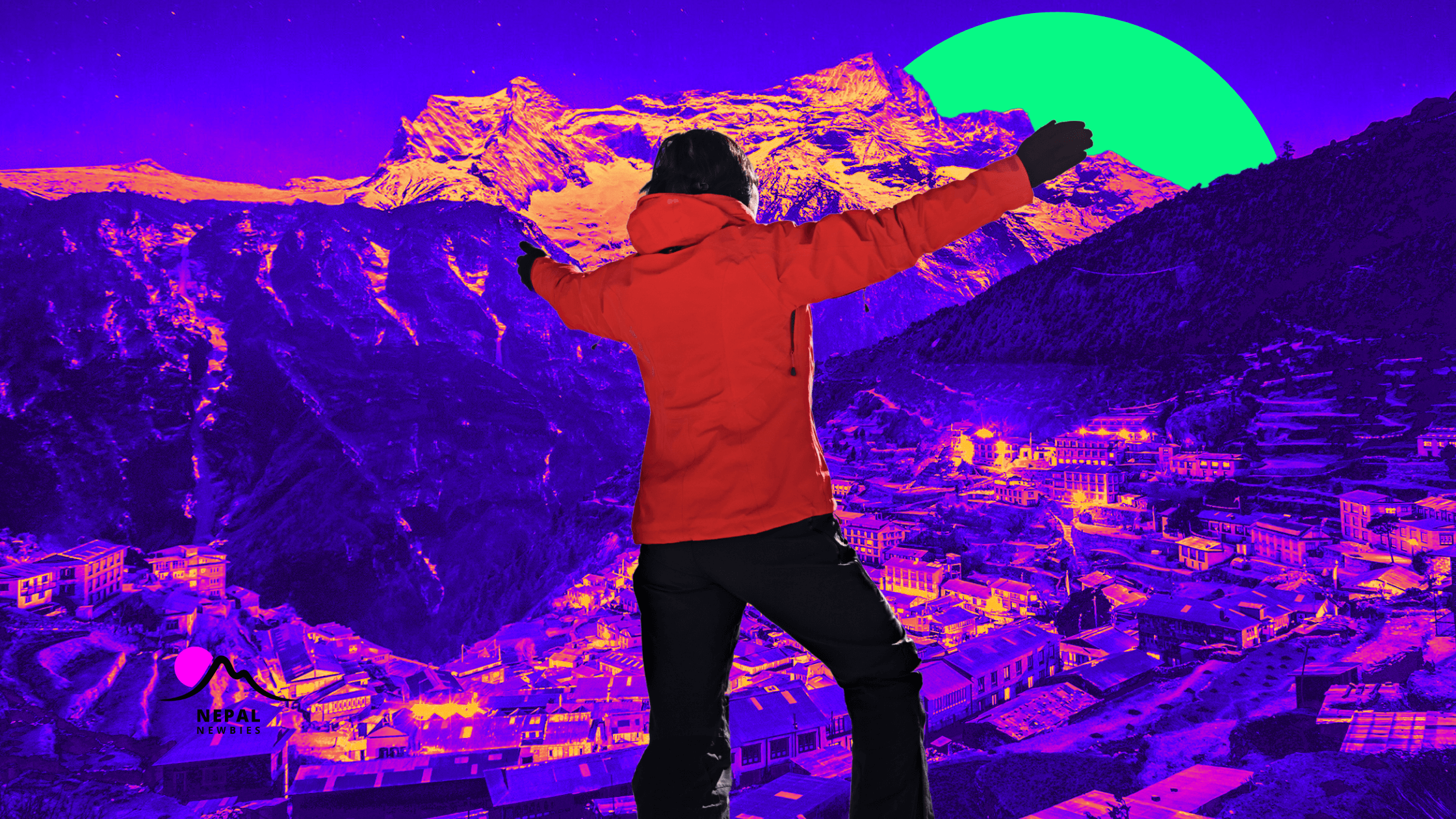
Here's what nobody tells you about trekking in Nepal: you'll spend around ten hours a day with your guide and porter. From breakfast until bedtime. For days. Walking, resting, eating, waiting out the rain. There's literally no privacy. They want to know everything about you, your family, your job, your life back home, and they want to tell you everything about theirs. It's lovely. And it's intense, I can tell you.
So choosing a trekking company isn't just about experience, safety or price. It's about the people you'll share every waking hour with. That's what makes or breaks your trek.
And yet every trekking company in Nepal says it's the best. The most experienced guides, the safest treks, the happiest clients. Scroll through a few websites and they all start to look the same. When you've never trekked in the Himalayas before, how are you supposed to tell the difference?
The nicest guide in all of Nepal
For my first trek to Mardi Himal Base Camp with a friend, we didn't pick a company from a website. Through our personal network, we ended up with two options: a well-recommended trekking company with a head office in Kathmandu, or an independent guide who was introduced to us as "the nicest guide in all of Nepal". Tempting, right? Looking back, the choice we made was one of the best decisions of the whole trip. But there's also one thing I'd do differently next time.
I don't sell treks and I don't earn commission from any trekking company. Here's everything I wish I'd known while I was figuring it all out: what to check, which questions to ask, and the red flags beginners often miss. No sugar-coating.
⚡THE SHORT ANSWER:
Choose a company or guide that is officially licensed, plans an itinerary with enough time to acclimatize, can clearly explain what happens in an emergency, is easy to reach during your trek, is transparent about what's included, and treats its guides and porters fairly. If a company can't answer your questions clearly before you book, it won't be easier when you're at 4,000 meters.
4 more things nobody tells you about booking a trek in Nepal
Before we get to the checklist, let's clear up a few things you won't read on agency websites or in Facebook groups:
- Every company looks the same online. Same mountain photos, same "experienced guides", same five-star reviews. The website tells you almost nothing. The answers to your questions tell you everything.
- The cheapest trek is paid for by someone. Usually by the porters carrying your bag, or by you, in a rushed itinerary and a freezing lodge.
- "You don't need a guide" is bad advice. It's popular in Facebook groups, but it's not what the rules say. More on that below.
- Things will go differently than planned. Weather changes, lodges get full, flights get cancelled. A good company isn't one where nothing goes wrong. It's one that handles it well when something does.
Why your trekking company matters so much as a beginner
Your trekking company decides more of your trek than you might think: how fast you climb, where you sleep, who walks beside you, and what happens if something goes wrong.
Most companies do a good job. But a poorly organized company or an inexperienced guide can turn your dream trek into something you'd rather forget. Think of:
- Too high, too fast. An itinerary that skips acclimatization to save a day or two, which increases your risk of altitude sickness.
- Walking in the dark. Bad planning that leaves you hiking for hours after sunset to reach your lodge. Trust me, that's no joke for a beginner.
- The cheapest lodges. Cost-cutting on accommodation and food, when you need warmth and good meals the most. (If you've read my article on sleeping at high altitude, you know how much a cold room matters.)
- No plan B. No clear idea of what to do when someone gets sick or the weather turns.
Do you need a guide in Nepal?
Yes. It's one of the most-asked questions in Facebook groups, and you'll often see people reply: "No, you don't need one. The trail is easy and well marked." But the rule is clear. Since April 1, 2023, foreign trekkers in Nepal's national parks and conservation areas must be accompanied by a licensed guide, with permits arranged through a registered trekking agency. You can read the official announcement on the Nepal Tourism Board website and in the U.S. Embassy's travel alert.
It's true that the rule isn't checked at every checkpoint, which is why you'll hear people say they trekked solo without problems. But not being checked isn't the same as being allowed.
To keep trekkers safe and to create work
And honestly, why would you want to break the rules of the country that's welcoming you? Nepal introduced this rule for good reasons: to keep trekkers safe after too many people got lost or ran into trouble alone, and to create work for local guides. Respecting it is part of being a good guest, just like respecting local customs.
It's a bit like the way you dress on the trail: in a culture where modesty matters, walking through villages in tiny shorts and low-cut tops isn't against the law, but it isn't respectful either. (More about that in What to Wear Trekking in Nepal.)
For a beginner, a guide is good news anyway. A good guide doesn't just show you the way. They watch for signs of altitude sickness, adjust the pace to your energy, deal with lodges and permits, and help you understand the culture around you.
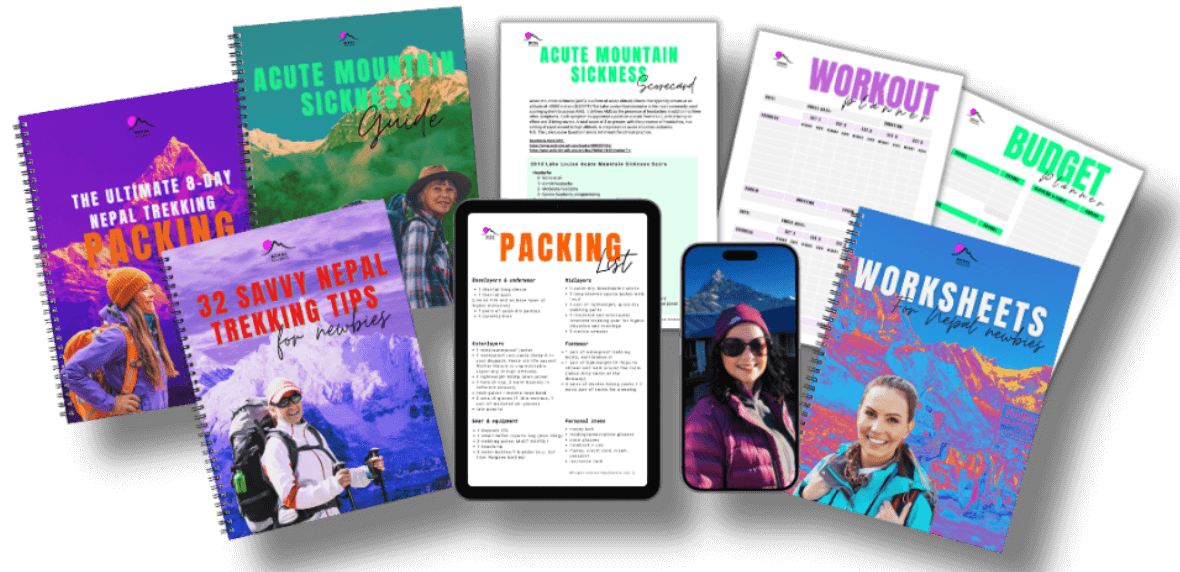
Prepare for Your Nepal Trek the Easy Way –
Get the Ultimate NEPAL Starter Kit.
NEW: Grab my complete Starter Kit packed with gear lists, handy guides, worksheets, and insider tips for trekking smart in Nepal!
Independent guide, local company or agency at home?
Your first decision is who you book with. You have three options.
- An independent guide can feel more personal and flexible. You often get to know them before the trek, and they can tailor the route to your preferences. But you depend on one person, and you need to check their license and experience carefully yourself. Permits usually still have to go through a registered agency.
- A local Nepali trekking company usually arranges everything: licensed guides, porters, permits, transport and accommodation. If a guide gets sick, they can send a replacement. Booking directly also means more of your money goes straight to the people in Nepal who make your trek happen. The quality varies, though, so choosing well matters.
- A travel agency in your home country offers a Nepal package with familiar contracts, customer service in your own language, and often protection under your country's travel laws. Good agencies usually work with reliable local companies they've known for years. The downside: you pay for that extra layer. A package bought at home is usually more expensive, and less of your money reaches Nepal.
The best balance
For most first-time trekkers, a well-chosen local company is the best balance. We had to make this exact choice ourselves. On one side, a reputable company with a head office in Kathmandu. On the other, an independent guide who came highly recommended as "the nicest guide in all of Nepal". Honestly, that second option sounded very appealing.
But just before our departure, Nepal was in the news because of heavy rain, floods and landslides. That made the decision for us. A stand-alone guide, however lovely, has no back office. A company does. We wanted a team in Kathmandu monitoring the conditions, and a place our families back home could call if something happened, either to us or to them. We went with the company, and we never regretted it.
Join a group or go private?
Once you know who you're booking with, there's another choice: join an existing group, or book a private trek.
Joining a group can be cheaper, and you'll meet fellow trekkers along the way. But you're tied to fixed dates, a fixed itinerary and the pace of the group, and you don't know in advance who you'll be walking with for days.
A private trek is just you, your partner or your own friends. You choose the dates, the pace and the rest days. We went private, just the two of us: two friends. It gave us the freedom to walk at our own speed, stop whenever we wanted and adjust the plan when needed.
But here's the thing: on a private trek, your guide becomes even more important. There's no big group or tour leader around you. It's just your little group and one or two people from the trekking company, for days on end. That's exactly why you want a guide you can trust completely.
PRO TIP: Did you know you can hire a female guide?
Here's something we only found out on the trail: in Nepal, there are trekking companies that specialize in female guides for women trekkers.
The pioneers are the Chhetri sisters, Lucky, Dicky and Nicky, who started 3 Sisters Adventure Trekking in Pokhara in the 1990s. Running a lodge, they kept hearing stories from women travelers who'd had uncomfortable or even unsafe experiences with male guides. So they did something about it, in a country where women working as mountain guides was almost unheard of. Their non-profit, Empowering Women of Nepal, has since trained around 2,000 Nepali women, many of them from disadvantaged backgrounds.
Are female guides as good as male guides? I'd say absolutely! Why not? They walk the same demanding trails, and training programs like these cover first aid, map reading and leadership skills. And let's be honest: some things are just easier to talk about with another woman.
Emancipation on the trail? We like that. And if you book a female guide, you're directly supporting women building an independent career in a field that used to be closed to them.
How to choose a trekking company in Nepal: 8 steps
1. Make a shortlist
Start broad. Look at Facebook groups, trekking forums, review sites and company websites. If you already know which trek you want, search for it by name, like "Mardi Himal trek", and you'll find plenty of companies.
Then ask your own network: friends, family or fellow trekkers who've been to Nepal. That's how we found both our options, and a personal recommendation from someone you trust is often worth more than any website.
PRO TIP: Keep track of your findings in a simple spreadsheet: company name, price, what's included, reviews and your gut feeling after contact. It makes comparing much easier.
2. Check licenses and registration
A trekking company should be registered with Nepal's Department of Tourism and ideally be a member of the Trekking Agencies' Association of Nepal (TAAN). Ask for their registration number and check it.
For individual guides, ask to see their official trekking guide license. Also ask about their training, first aid certification and English. A guide who can't explain clearly what's happening when you feel unwell is a real problem at altitude.
3. Look closely at the itinerary
This is where beginners most often go wrong, because a shorter trek looks cheaper and more convenient.
Check how much altitude you gain per day, especially above 3,000 meters, and whether there are acclimatization days. A good company builds in time for your body to adjust and doesn't mind if you ask why the itinerary looks the way it does. Also ask what happens if you need an extra day: is there flexibility, and what does it cost?
Here's the uncomfortable truth: a short itinerary sells well, because it looks cheaper and fits into a holiday. But your body doesn't care about your holiday schedule.
4. Ask about safety and emergencies
Most beginners don't think to ask, but this is the most important step. Nepal's mountains bring real risks: altitude sickness, sudden weather changes, landslides.
Ask the company:
- What happens if I get altitude sickness?
- How do you arrange a helicopter evacuation, and who pays for it first?
- Do guides carry a first aid kit, and how do they communicate in areas without phone signal?
- Also check that your own travel insurance covers trekking at the altitude you'll reach, including helicopter evacuation. Many standard policies don't.
- Ask how you can reach them during the trek. We had the direct number of the head office and could reach them easily via WhatsApp. That small detail gave us peace of mind throughout the trip, and it helped our families back home too: they knew exactly who we'd booked with, in case of an emergency.
5. Look at the guide, the group and the ratio
Ask how big the group will be and how many guides and porters come along. A small group with enough staff means more attention for you, and in an emergency, one guide can stay with the group while another helps whoever needs it.
If you're older or less experienced, ask whether they regularly guide beginners like you. A guide used to fast, fit twenty-somethings may set a pace that doesn't suit you.
What makes a good guide? Ours was calm, highly experienced and quietly observant. He picked up on small problems before they became big ones, and we never felt rushed or pressured. That's what you're looking for: not the fastest guide, but the one who notices when you need a break before you say it.
And a good guide helps with things you'd never think of. Along the way, I still needed to buy trekking poles. Haggling is expected in Nepal, but if you're not used to it, it's awkward and exhausting. What's a fair price? When do you stop? Our guide simply took over, negotiated a good deal, and saved me both money and a lot of discomfort. Best negotiation I never had to do.
6. Compare what's included, and what isn't
Two packages with a similar price can be very different. Check exactly what's included: permits, transport to and from the trailhead, accommodation, meals, porters, drinking water, and the guide's own costs. Things like hot showers, charging your phone and Wi-Fi often cost extra in teahouses.
7. Don't just go for the cheapest
It's tempting to pick the lowest price, but on a trek, cheap often means cutting corners somewhere: rushed itineraries, basic lodges, less experienced guides, or porters who are underpaid and poorly equipped.
Ask how the company treats its staff. Are porters' loads limited? Do guides and porters have proper gear, insurance and fair pay? A company that cares for its team usually cares for you too.
8. Agree on your non-negotiables before you go, not on the trail
Don't make my mistake. In Nepal, hospitality often comes before a tourist's reservation. On our trek, we were suddenly asked to share our room with a complete stranger, because a large group of local young trekkers also needed beds.
To my Western brain, that sounded like natural-disaster logic, not a normal way to handle an overbooking. I held my ground the only way I knew: "Sorry, I don't share rooms with strangers. Could you solve this, please?" And they did, perfectly. But it was awkward, and I was bone-tired, starving and out of battery at the time.
So discuss what really matters to you before you go, both with the agency and with your guide, since the guide often books the rooms. Think about a private room, dietary needs, your walking pace, or how much you want to spend on extras. It saves you uncomfortable conversations when you're already exhausted.
The part nobody talks about: you'll spend every waking hour with your guide
Let's come back to where we started, because agencies never mention it: trekking with a guide and a porter is intense. You spend about ten hours a day together, from the moment you get up until you go to bed. You walk together, take breaks together, arrive at the lodge together and often sit in the same dining room in the evening. For days.
I had to get used to that. In the beginning it felt awkward. What do you talk about? Do you walk next to each other or behind each other? Is silence rude? And let's be fair: they might find you a bit awkward too. You come from different worlds, often with a language gap in between.
It takes a few days to build a relationship, and that's completely normal. A few things that help:
- Meet your guide before the trek, even if it's just a short video call or a coffee in Kathmandu or Pokhara. A familiar face on day one makes a big difference.
- Learn a few words of Nepali. "Namaste", "kasto chha?" (how are you?) and "dhanyabad" (thank you) go a long way. And you'll hear your guide say "bistari, bistari" (slowly, slowly) more times than you can count.
- Ask about their life. Their family, their village, how they became a guide. Most guides love to share, and it turns a service into a connection.
- Say what you need. If you'd rather walk in silence for a while, or want some time alone in the evening, just say so kindly. A good guide respects that.
- Give it time. By the end of our trek, saying goodbye to our guide and porter felt like saying goodbye to good friends.
This is also why choosing the right guide matters so much. You're not just booking someone who knows the way. You're choosing who you'll share every day of your trek with.
16 questions to ask before you book
- Are you registered with the Department of Tourism, and are you a TAAN member?
- Is my guide licensed, and can I see the license?
- How much experience does my guide have with this specific trek?
- Does my guide have first aid training?
- How many acclimatization days are in the itinerary?
- What happens if I need an extra day, or need to go down?
- How do you handle altitude sickness and emergency evacuation?
- How many people are in the group, and how many guides and porters?
- What exactly is included in the price, and what isn't?
- What kind of accommodation will we stay in?
- How are your porters and guides paid, equipped and insured?
- What is your cancellation and refund policy?
- How can I reach your office during the trek, and is someone available if something goes wrong?
- What happens if a lodge is overbooked? Will I ever be asked to share a room?
- Can I request a female guide?
- Can I meet or video call my guide before the trek?
A good company answers these without hesitation. If you get vague answers, or a push to book quickly, take note.
Red flags to watch out for...
- Prices far below everyone else's. Someone pays for the difference, usually you or the staff.
- An itinerary that's noticeably shorter than other companies' for the same trek.
- No clear answer about emergencies or evacuation.
- Hard to reach before you book. If it takes days to get an answer now, imagine during your trek.
- Pressure to pay the full amount quickly, or only in cash.
- Reviews that all sound the same, or only glowing reviews on their own website and none elsewhere.
- No registration number, or reluctance to share it.
- "You don't really need a guide, we'll just get you a permit." A company that bends the rules for you will bend them elsewhere too.
- Promises that sound too good, like "anyone can do Everest Base Camp in 10 days, no training needed."
Before you book: read the small print
Once you've chosen, ask for the details in writing: the itinerary, what's included, the price, your non-negotiables, and the payment and cancellation terms. Check what happens if the trek is cut short because of weather, illness or a cancelled flight to Lukla or Pokhara. And confirm that your insurance covers what the company doesn't.
It may feel like a lot of work. But going through these steps means you'll start your trek trusting the people around you, and that peace of mind is worth more than any discount.
Frequently asked questions
Do I need a guide to trek in Nepal?
Yes. Since April 1, 2023, foreign trekkers need a licensed guide in Nepal's national parks and conservation areas, arranged through a registered agency. The rule isn't enforced at every checkpoint, but that doesn't make trekking without a guide allowed. Respecting it is part of respecting the country, and as a beginner, you'll benefit from a guide anyway.
Should I book an independent guide or a trekking company?
An independent guide can be personal and flexible, but has no back office if something goes wrong. A reputable company has an office, a team monitoring conditions, and someone your family can call in an emergency. For first-time trekkers, especially in uncertain weather or conditions, a company usually gives more security.
Is it better to book a local Nepali company or an agency in my home country?
Both can work. Agencies at home offer familiar contracts and support in your own language, and good ones work with trusted local partners. But they're usually more expensive, and less of your money reaches Nepal. Booking directly with a reputable local company is often cheaper, supports Nepali guides and porters more directly, and gives you people on the ground who can respond quickly when conditions change. Whichever you choose, ask the same questions.
Should I join a group trek or book a private trek?
A group trek can be cheaper and sociable, but you're tied to fixed dates and the group's pace. A private trek, with your partner or friends, gives you freedom over dates, pace and rest days. On a private trek, a reliable guide matters even more, because it's just your small group and your guide for days.
Can I hire a female trekking guide in Nepal?
Yes. Several companies offer female guides, and some specialize in them, like 3 Sisters Adventure Trekking in Pokhara, which has been training Nepali women as guides since the 1990s. Many women trekkers feel more comfortable with a female guide, and booking one supports women's employment in Nepal. You can also ask any trekking company whether they have female guides available.
Is it awkward to trek with a guide?
It can be at first. You spend around ten hours a day together, with very little privacy and often a language and culture gap. That's normal, and it usually gets easier after a few days. Meeting your guide before the trek, learning a few Nepali words and asking about their life all help.
Can I book a trekking company when I arrive in Kathmandu?
You can, but as a beginner it's better to arrange it in advance. It gives you time to compare, check licenses and read reviews, instead of deciding while jet-lagged in a busy street full of offers.
What should a trekking package include?
At minimum: permits, a licensed guide, accommodation and meals during the trek, and transport to and from the trailhead. Porters, airport pickups and domestic flights vary per company.
What's the biggest mistake beginners make when choosing?
Choosing on price or speed instead of the itinerary. An itinerary without enough acclimatization time is the most common reason beginners struggle.
Choose with confidence
The right trekking company won't just get you to the top. It will make you feel safe, looked after and free to enjoy every step, even when the weather, the trail or a full lodge throws you a surprise. Take your time, ask your questions, trust your gut, and be the kind of guest Nepal is happy to welcome back.
PREPARE FOR YOUR NEPAL TREK THE SMART WAY!
Everything I wish I'd had before my first trek: checklists, worksheets and honest tips. Free!

Hey there, I'm Sandra!
Life coach, mountain lover and proud Nepal newbie. I did my first trek in Nepal in my fifties, and it changed everything. Nothing grounds you like standing among those Himalayan giants.
On the trail, I learned the hard way that it's as much a mental game as a physical one. So I started Nepalnewbies.com to give beginners like us the honest advice I wish I'd had. No sugar-coating.
👉 READ MY STORY
Popular posts
What I found out, no sugar-coating, about what 17,598 ft (5,364 m) asks of you.
I made it to base camp, but my prep wasn't even close. Learn from my mistakes.

Here's what using a toilet is really like on a trek, and 10 tips to make it a lot less awkward.
NEW: THE NEPAL STARTER KIT.
Leave a Reply
Grab My Nepal Starter Kit.

PREPARE FOR YOUR NEPAL TREK THE SMART WAY! Everything I wish I'd had before my first trek: checklists, worksheets and honest tips. Free!
Copyright ©Nepalnewbies.com All Rights Reserved.
The Nepal trekking blog for beginners who want the real story. First-hand experience from a fifty-something beginner, honest tips and practical guides for your first trek in Nepal. Squat toilets included. No sugar-coating.
Copyright © YourCompany. All Rights Reserved
1 Response to "How to Choose a Trekking Company (It Makes or Breaks Your Trek)"
[…] Want to know how to choose yours, which questions to ask and which red flags to watch out for? Read my full guide: How to Choose a Trekking Company (It Makes or Breaks Your Trek). […]